Railroad landmark · Logan Township, Blair County
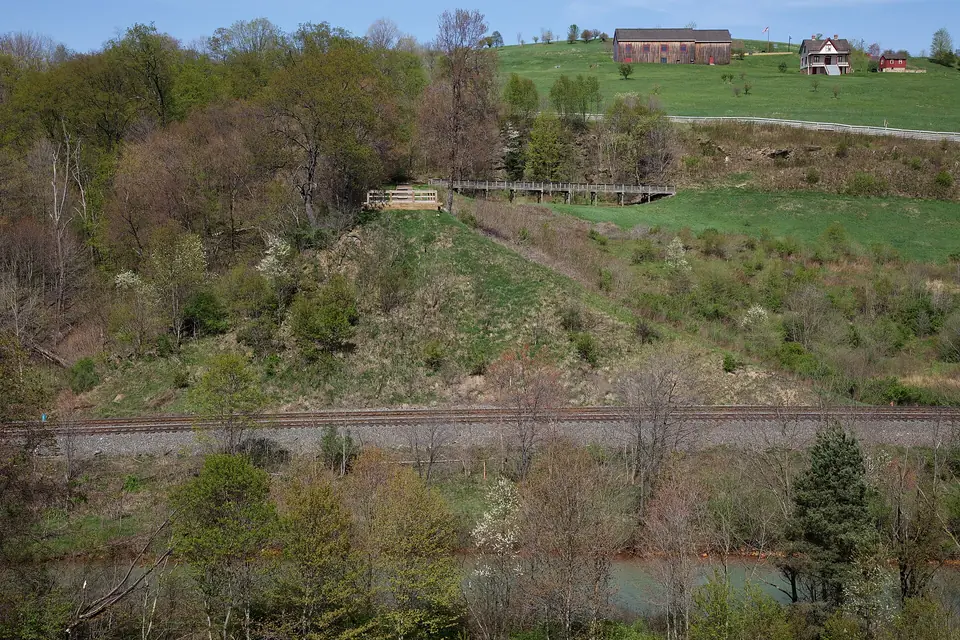
Horseshoe Curve
The great 1854 railroad curve that carried the Pennsylvania Railroad over the Alleghenies, still busy with freight trains and viewed from a trackside park reached by funicular.
40 places
Railroad history, long ridges and the valleys between
In the middle of Pennsylvania the mountains run in long, parallel ridges with farm valleys between them, and for generations they stood like a wall between Philadelphia and the West. From 1834 the Allegheny Portage Railroad hauled canal boats over the mountain on inclined planes, and its remains are now a national historic site. The Pennsylvania Railroad found a better way in 1854 at Horseshoe Curve near Altoona, where trains still swing around a great bend to climb the Allegheny Front.
In Johnstown, a national memorial and a museum recall the flood of 1889, when a dam failed upstream and more than 2,200 people died. Around State College, Penn State's arboretum and art museum, the boat ride through Penn's Cave and the Victorian streets of Bellefonte make an easy weekend, and Raystown Lake, the largest lake entirely within Pennsylvania, is the place for a day on the water.
Highlights
Railroad landmark · Logan Township, Blair County
The great 1854 railroad curve that carried the Pennsylvania Railroad over the Alleghenies, still busy with freight trains and viewed from a trackside park reached by funicular.
National memorial · Adams Township, Cambria County
The remains of the South Fork Dam, whose collapse on May 31, 1889 unleashed the flood that killed more than 2,200 people downstream, with a visitor center telling the story.
Photo: David Brossard, CC BY-SA 2.0, via Wikimedia Commons
National historic site · Juniata Township, Blair County
Remains of the 1830s railroad that hauled canal boats over the Allegheny Mountains on inclined planes, with a historic tavern, trails and the first railroad tunnel in the country.
Show cave · Gregg Township, Centre County
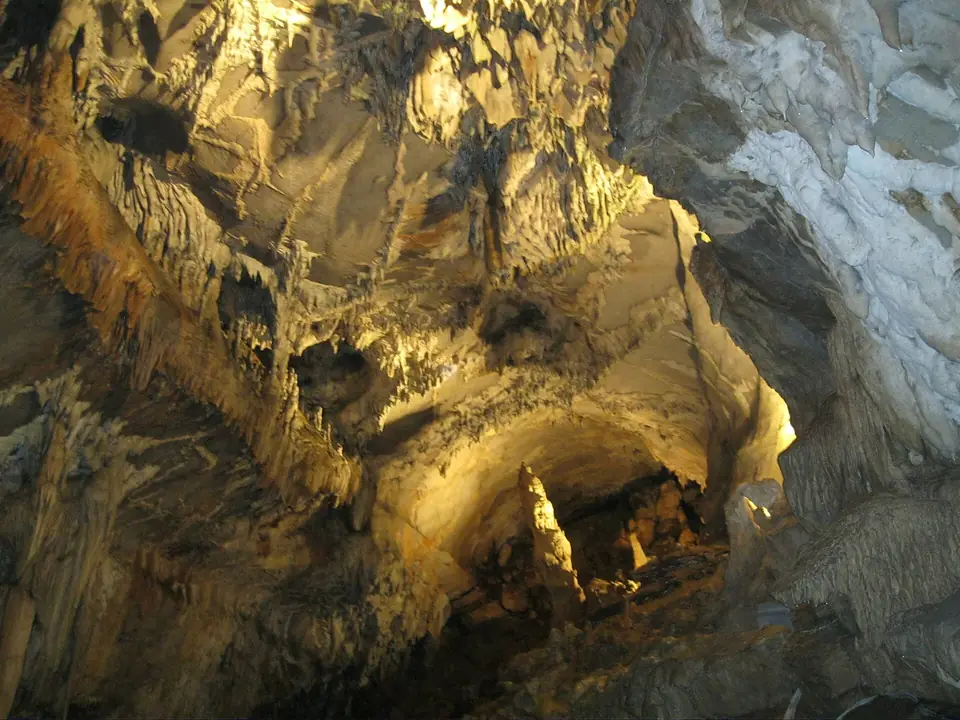
Flat-bottomed boats glide through this flooded limestone cavern, with the whole tour taken by water, and a separate tour explores a wildlife park on the farmland above.
Photo: Ruhrfisch, CC BY-SA 3.0, via Wikimedia Commons
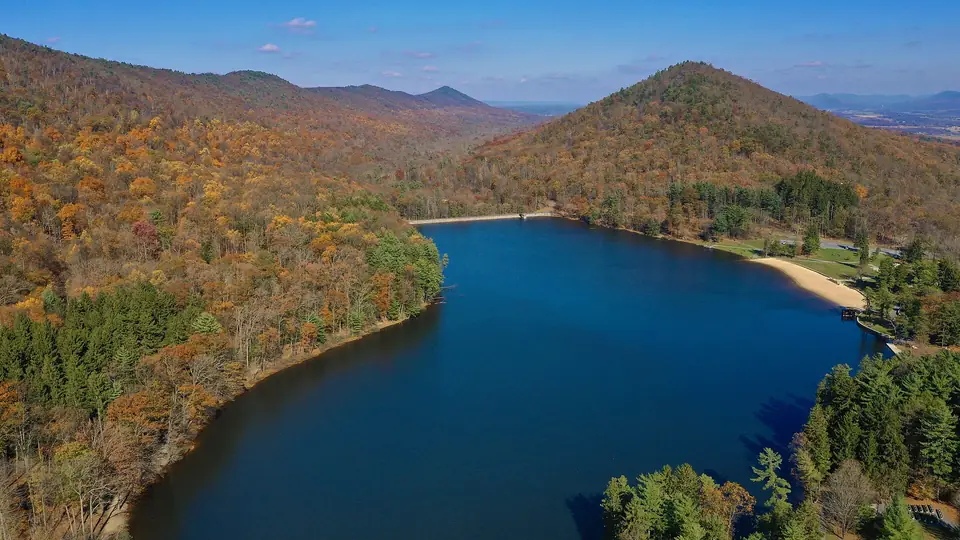
Lake and recreation area · Juniata Township, Huntingdon County
The largest lake entirely within Pennsylvania, a long reservoir winding between forested ridges, with houseboating, beaches and the Allegrippis Trails, a nationally known mountain-bike network.
Town · Bellefonte, Centre County
A Victorian county seat of ironmasters' mansions and governors' homes, built around the Big Spring and Talleyrand Park, with trout fishing on Spring Creek.
The full list
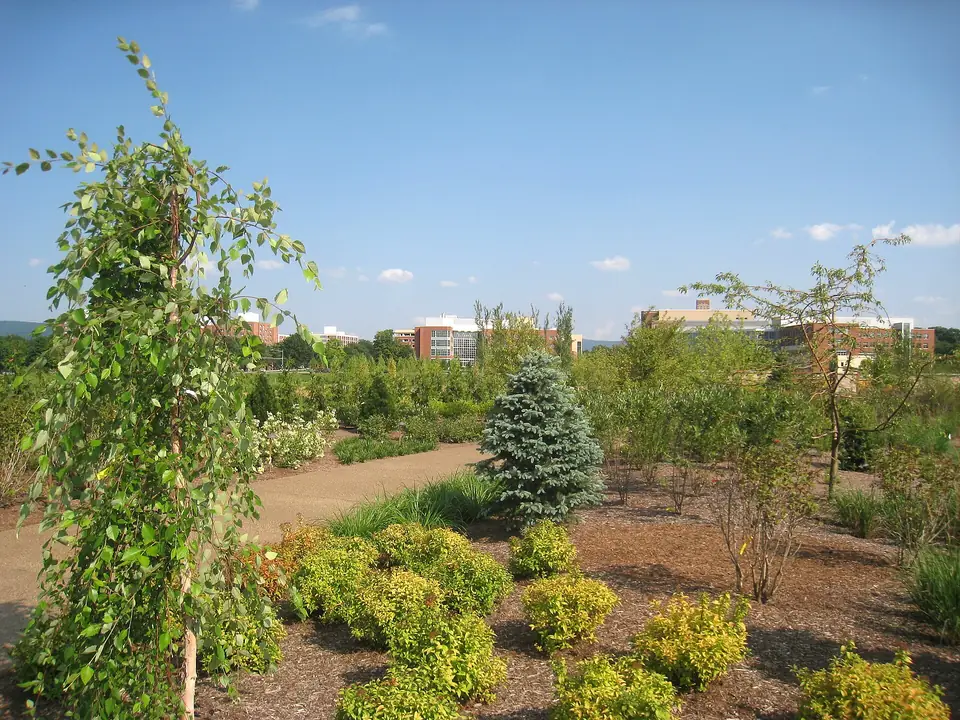
The university's public garden, with the formal H.O. Smith Botanic Gardens, a children's garden and pollinator plantings, and the Palmer Museum of Art next door.
A three-foot-gauge railroad from the 1870s brought back to life, with steam excursions from Rockhill and an unusually complete set of old shops, roundhouse and yards.
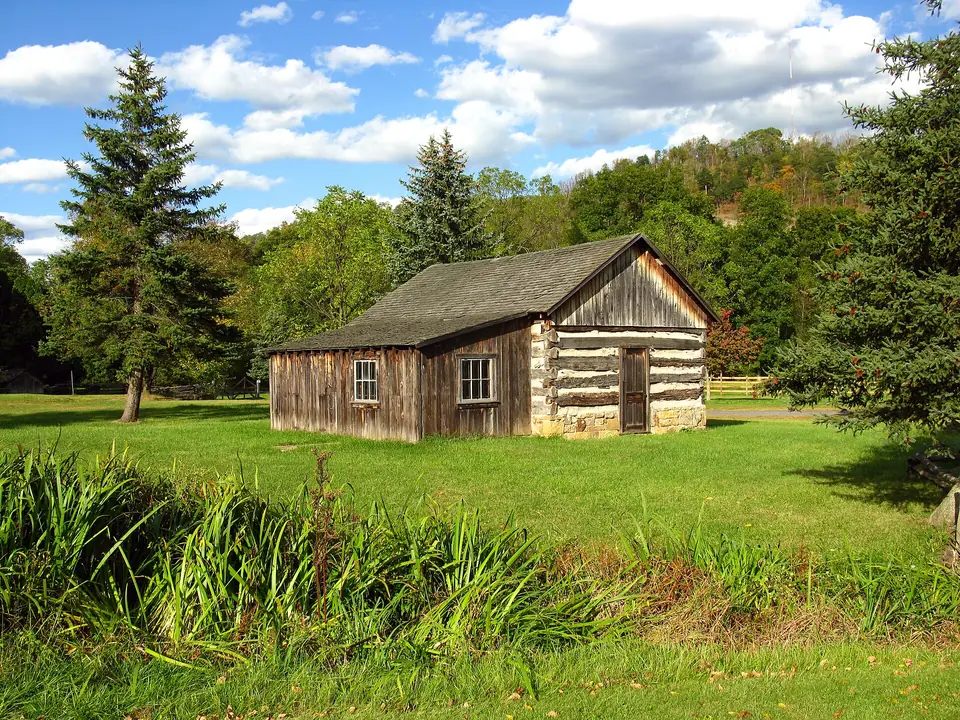
A re-created village of log and frame buildings where costumed interpreters demonstrate frontier trades and daily life of the 1700s and 1800s.
A replica log blockhouse built in 1958 holds artifacts of the 1758 fort and life along the Forbes Road, from muskets to an 1814 Conestoga wagon.
The story of the 1889 flood that killed more than 2,200 people, told in a former Carnegie library with an Oscar-winning documentary and an animated relief map.
Penn State's art museum, which moved in 2024 into a striking new building in the arboretum, with galleries spanning American, European, Asian and contemporary art.
Exhibits on the state's soldiers from colonial times onward center on the 28th Infantry Division Shrine, with a walk-through World War I trench scene.
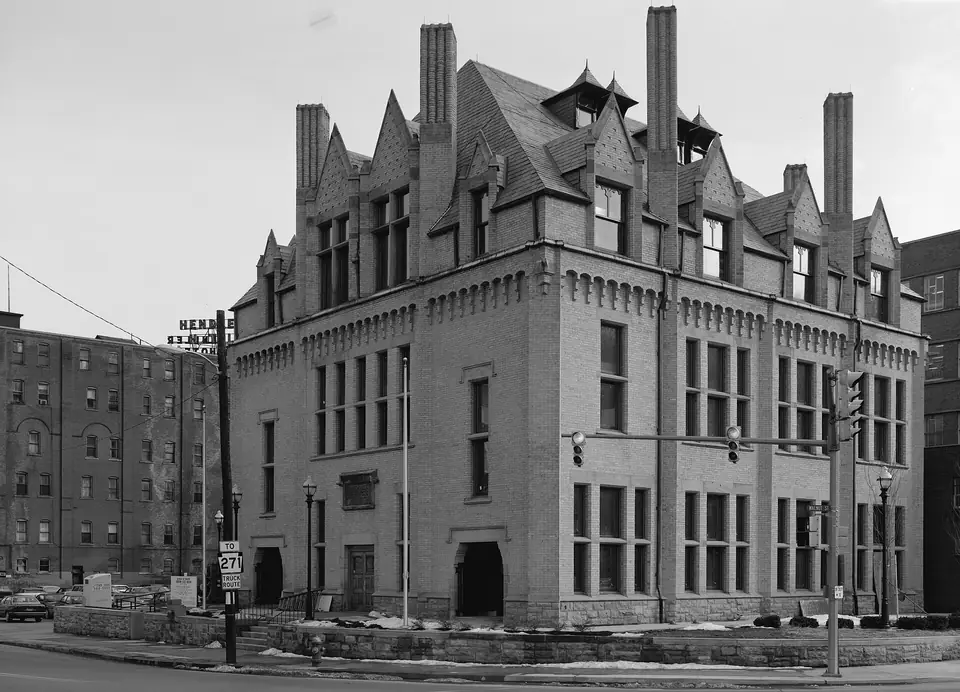
The story of the workers who built and ran the Pennsylvania Railroad's great shops here, told in the former master mechanics building; the museum also runs the Horseshoe Curve visitor center.
Remains of the 1830s railroad that hauled canal boats over the Allegheny Mountains on inclined planes, with a historic tavern, trails and the first railroad tunnel in the country.
The great 1854 railroad curve that carried the Pennsylvania Railroad over the Alleghenies, still busy with freight trains and viewed from a trackside park reached by funicular.
A three-foot-gauge railroad from the 1870s brought back to life, with steam excursions from Rockhill and an unusually complete set of old shops, roundhouse and yards.
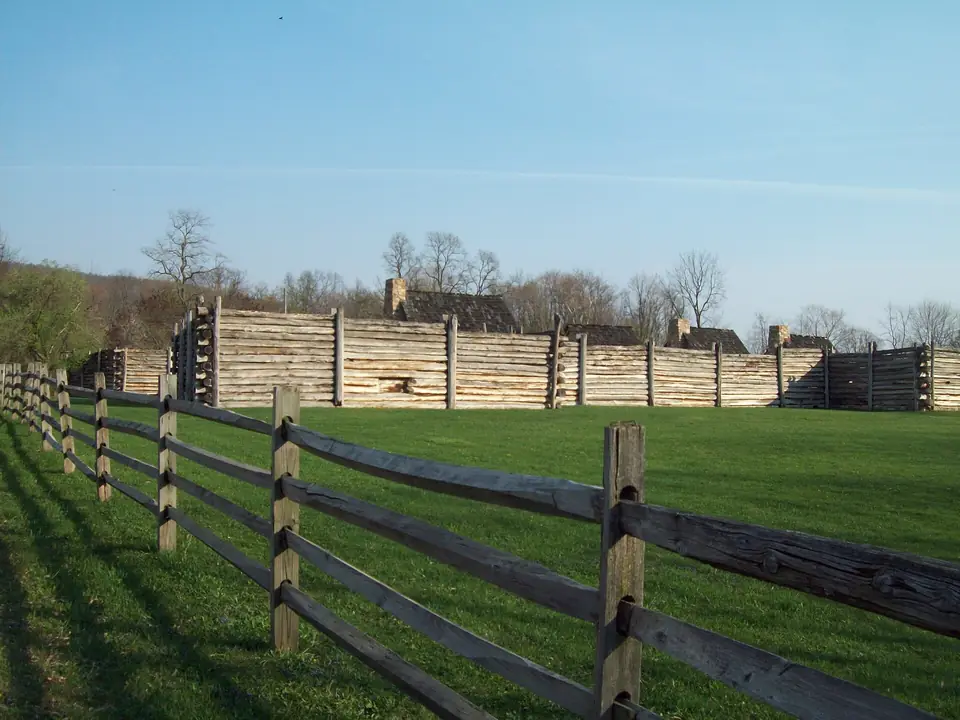
A reconstructed log stockade of 1778, built to protect lead mining in Sinking Valley during the Revolution, with a visitor center and nature trails.
The remains of the South Fork Dam, whose collapse on May 31, 1889 unleashed the flood that killed more than 2,200 people downstream, with a visitor center telling the story.
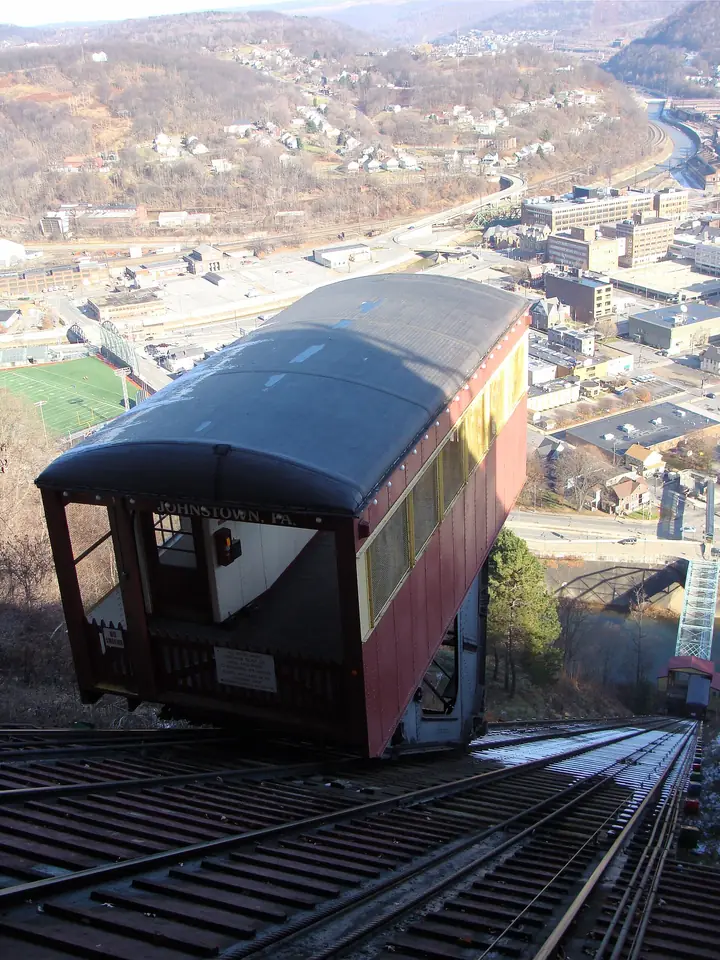
Built in 1891, after the great flood, as an escape route to high ground, a steep funicular big enough to carry cars, topped by an overlook of the city.
A re-created village of log and frame buildings where costumed interpreters demonstrate frontier trades and daily life of the 1700s and 1800s.
A Lincoln Highway county seat with 18th- and 19th-century buildings, the house where Washington stayed during the Whiskey Rebellion, covered bridges nearby and a grand old mineral-springs resort.
A Victorian county seat of ironmasters' mansions and governors' homes, built around the Big Spring and Talleyrand Park, with trout fishing on Spring Creek.
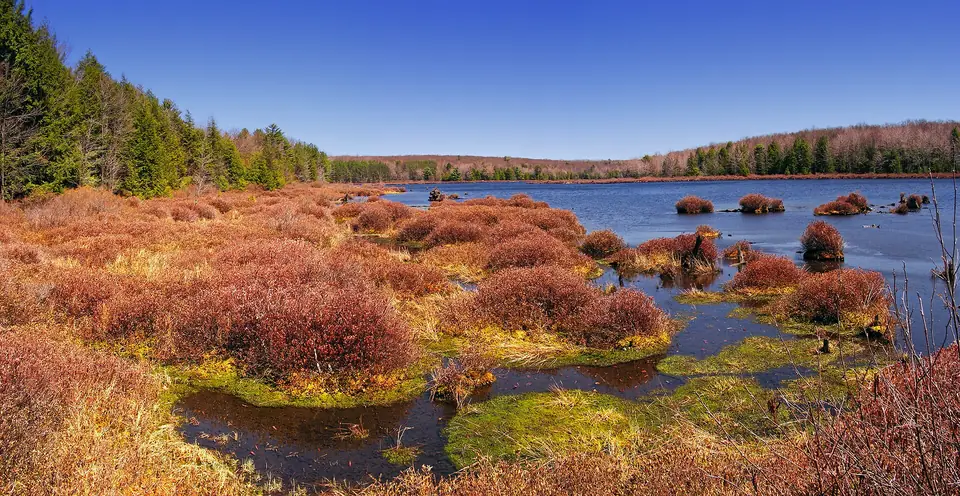
A tea-colored lake fringed by bogs, where a boardwalk leads among carnivorous sundews and pitcher plants, with CCC-built cabins, a beach and miles of forest trails all around.
Mountains wall in the valley around this small lake, with a beach, Civilian Conservation Corps cabins and the Tuscarora Trail climbing to ridge-top views through the surrounding state forest.
Glendale Lake reaches into many wooded coves across the high Allegheny Plateau, with a long shoreline for boaters and anglers, a big campground and a swimming beach.
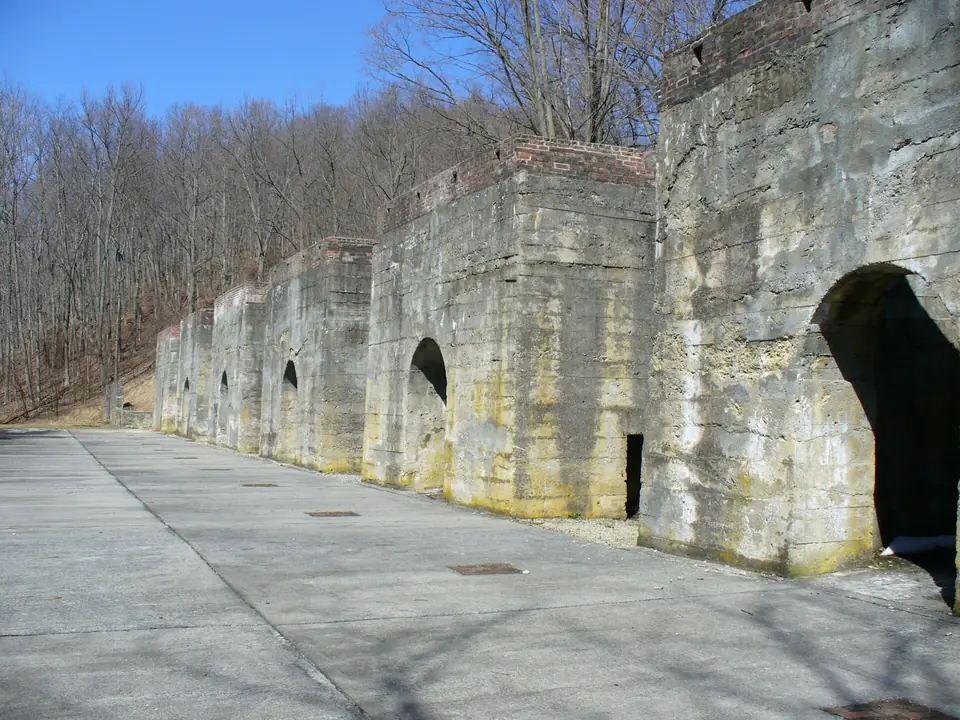
A big colony of bats summers in an old church and winters in a former limestone mine here, alongside historic lime kilns, a lake with a beach and trails through woods and wetlands.
Campers, boaters, anglers and hikers have plenty of room to spread out around a big lake with a sandy beach, in the ridges along the old Lincoln Highway.
A rugged little gorge cut by Great Trough Creek, with a swinging suspension bridge, Balanced Rock perched improbably on a cliff, Rainbow Falls and an old Ice Mine that breathes cold air in summer.
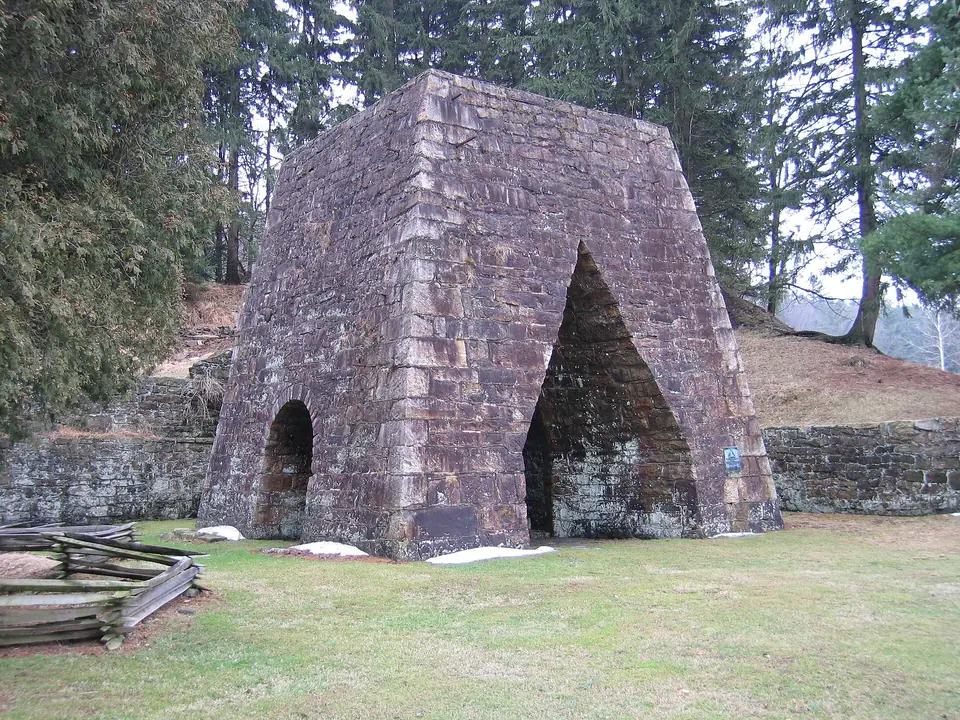
The stone furnace stack and surviving buildings of a 19th-century iron village sit beside a small swimming lake, with trails climbing into the rugged Seven Mountains.
The Nature Inn, a green-built lodge, looks out over a long reservoir beneath Bald Eagle Mountain, where boaters, anglers and birders spread out across the water and wetlands.
Pennsylvania's second-highest mountain rises above remote woods with long views and cool summer air, with a swimming pool and campground below and a ski resort on its upper slopes.
Off the beaten path in the Seven Mountains, a little swimming lake with a beach and campground, and nothing but forest on the slopes around it.
Remote and rustic, this tiny park sits in a mountain bowl of the Seven Mountains, with a small pond, the remains of a Depression-era CCC camp and backcountry trails heading into Rothrock State Forest.
The largest lake entirely within Pennsylvania, a long reservoir winding between forested ridges, with houseboating, beaches and the Allegrippis Trails, a nationally known mountain-bike network.
Cool water and a sandy beach make this small, forest-ringed lake a low-key summer swimming spot, with shaded picnic groves and short trails in the surrounding ridges.
The Raystown Branch of the Juniata River loops around three sides of this wooded peninsula, near the route of an old Iroquois warpath, with river fishing, paddling and quiet trails.
Where Big Poe Creek meets Penns Creek, a famed trout stream with a June green drake hatch, the Mid State Trail crosses an old rail bridge and plunges into a railroad tunnel through the mountain.
Honey Creek runs cool and clear beneath big conifers in this small mountain park, a quiet retreat for a picnic, a night at the rustic campground or a few casts for trout.
Along a gravel road deep in the forest, a handful of picnic tables sit beside White Deer Creek, good for a quiet lunch and some trout fishing in a remote valley.
Mountain forest along the Maryland line, with the roadless Martin Hill Wild Area, stretches of the Tuscarora Trail and quiet gravel roads over long, wooded ridges.
Deep hollows and long ridges of the Seven Mountains, with the Mid State Trail, the old-growth hemlocks and rhododendron of the Alan Seeger Natural Area and the boggy Bear Meadows Natural Area.
More than 300 miles of orange-blazed footpath across the middle of the state, from the Maryland line to New York, along rocky ridgetops with wide views.
Linking the Mid State and Tuscarora trails, about 84 miles of rocky ridge walking, known for its vistas, the Throne Room rock formation and the Thousand Steps stone stairway.
A family-run amusement park in the Blair County countryside, with classic rides, the Laguna Splash water park and Italian food rooted in the family's sauce-making tradition.
Flat-bottomed boats glide through this flooded limestone cavern, with the whole tour taken by water, and a separate tour explores a wildlife park on the farmland above.
Guided tours lead through a series of big chambers to the Tower of Babel, a massive stalagmite, and a campground on the grounds invites a longer stay.
One guided tour takes in two separate caves, Lincoln Caverns and Whisper Rocks, with crystal formations underground and gem panning and nature trails above.